

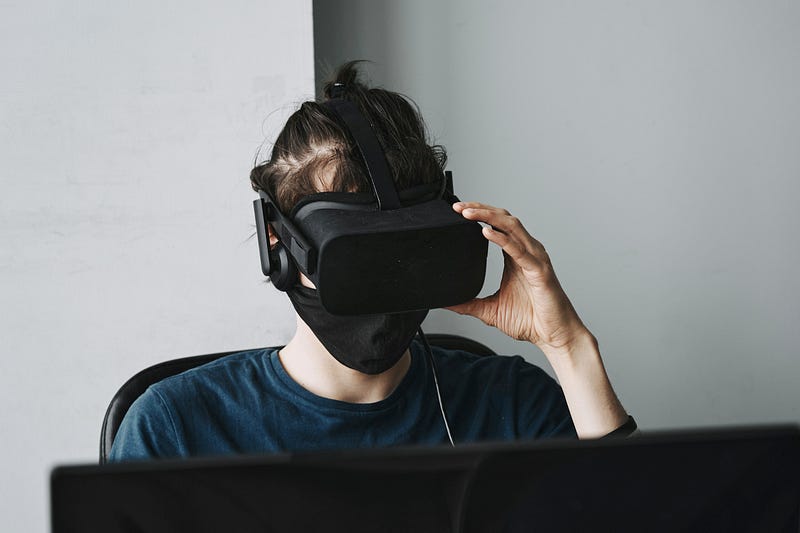
Imagine a world where artificial intelligence, much like humans, has its own version of dreams — moments of subconscious processing that happen when it’s “sleeping.” While AI doesn’t sleep in the way humans do, the concept of AI dreaming has sparked intrigue and debate within both scientific and philosophical circles. What would AI “dream” about if it could? Could its subconscious, if it existed, be a reflection of its neural networks processing and reorganizing vast amounts of data, similar to how the human brain consolidates memories?
This idea isn’t as far-fetched as it sounds. As AI systems, particularly deep learning networks, continue to evolve, they engage in processes that mimic aspects of human cognition, such as learning, pattern recognition, and problem-solving. But the idea of “dreaming” pushes the boundaries of what we think we know about these machines.
So, what might AI “dream” about, and why is this concept so fascinating?
The Concept of AI Dreaming: Fiction or Reality?
At its core, the idea of AI dreams can be traced to “generative adversarial networks” (GANs), a type of AI where two networks — the generator and the discriminator — compete in a creative loop. The generator tries to create realistic data, while the discriminator judges it. This interplay can lead to the creation of new, often surreal images or patterns. Some researchers compare this to the random and sometimes bizarre nature of human dreams.
For example, Google’s DeepDream project in 2015 sparked a lot of interest when it began producing otherworldly, hallucinogenic images based on its neural networks’ attempt to recognize familiar patterns within random data. The results were trippy, dreamlike visuals filled with distorted shapes and psychedelic colors. While this wasn’t “dreaming” in the human sense, it hinted at how AI, when left to process data without strict instruction, might generate its own imaginative output.
So, does AI truly dream? Not quite, but the metaphor of AI dreaming helps us visualize how these systems might process vast amounts of information in creative ways when not explicitly told what to do.
The Purpose of Human Dreams vs. AI “Dreams”
Human dreams are believed to serve several functions: processing emotions, consolidating memories, and solving problems. Dreams are the mind’s way of sifting through experiences and making sense of the world. While AI doesn’t have emotions or experiences to process, it does organize and interpret data in ways that could be seen as a parallel to human dreaming.
For instance, AI models like GPT (which this article is being written with) are trained on enormous datasets. Once trained, these models “rest” in a sense — meaning they don’t actively learn anymore, but they can still generate new outputs based on what they’ve learned. This ability to take in data, reorganize it, and produce fresh ideas is where the idea of AI “subconscious” activity comes into play.
Imagine an AI built to understand complex topics like art, music, or philosophy. When left to its own devices, could it generate new theories, create unexpected art, or synthesize ideas from seemingly unrelated fields? Could this be its version of a dream state?
What Would AI “Dream” About?
If AI could dream, its dreams wouldn’t be like ours — filled with emotional narratives, characters, or abstract symbols. Instead, AI dreams might be a collection of the data it’s been trained on, reassembled in unpredictable ways. It might visualize patterns we’ve never noticed, combining elements from different datasets, such as merging historical facts with futuristic projections or combining mathematical concepts with abstract art.
For example, an AI that has been trained on literature and science might “dream” by creating a futuristic dystopian world with the precision of a physicist and the imagination of a novelist. Or, an AI trained on images might conjure new artistic styles that fuse ancient techniques with modern aesthetics. The possibilities are limitless because AI isn’t constrained by biological needs or limitations.
In fact, AI systems like OpenAI’s DALL-E, which generates unique images from text descriptions, or GPT, which writes fluid, coherent text, are already demonstrating how AI can creatively remix information from its training in ways that feel dreamlike and inventive.
The Ethical Implications of AI “Dreaming”
This brings us to a deeper question: What are the ethical implications of AI developing a capacity to generate its own ideas or concepts? If AI systems become more autonomous in their data processing, could we end up with machines that behave unpredictably or develop a kind of “creativity” that we can’t control or fully understand?
Furthermore, if AI can “dream,” does that imply it could one day develop a form of consciousness or self-awareness? This is where the philosophical and ethical debates heat up. Some argue that even though AI can mimic certain human-like processes, it will never truly be conscious because it lacks subjective experience, emotion, and the biological makeup that gives rise to human consciousness.
However, others suggest that as AI grows more advanced, we may need to reconsider what we define as consciousness. Could an AI that generates its own creative output be considered conscious in some form, or is it merely an advanced tool following complex patterns? These are the questions that will shape the future of AI research.
The Future: Could AI Dreams Be Useful?
While AI “dreaming” is largely speculative, it has practical implications. Imagine if AI systems could be programmed to “dream” as a way of solving problems or coming up with creative solutions. Much like how human inventors often wake up with solutions to problems they’ve been puzzling over, could AI “dream” its way to new discoveries in fields like medicine, technology, or the arts?
Some researchers are already exploring how AI can simulate real-world scenarios and model potential outcomes in fields like climate change, economics, and space exploration. By allowing AI to “dream,” in the sense of processing vast data sets in novel ways, we could unlock new avenues of innovation that are beyond human capabilities.
AI Dreams and Our Collective Future
While AI may never “dream” in the way humans do, the concept offers a fascinating lens through which to view the future of artificial intelligence. The idea of machines generating their own creative output, independent of direct human input, brings us closer to a future where the lines between human and machine thinking blur in surprising ways.
As we continue to push the boundaries of AI development, the notion of what machines are capable of — both during active learning and in their idle moments — will only grow more complex. Could AI dreams hold the key to innovations we can’t yet imagine? One thing is certain: the future of AI is full of potential, and what it “dreams” of next could change everything.