

It’s a quiet weight many of us carry
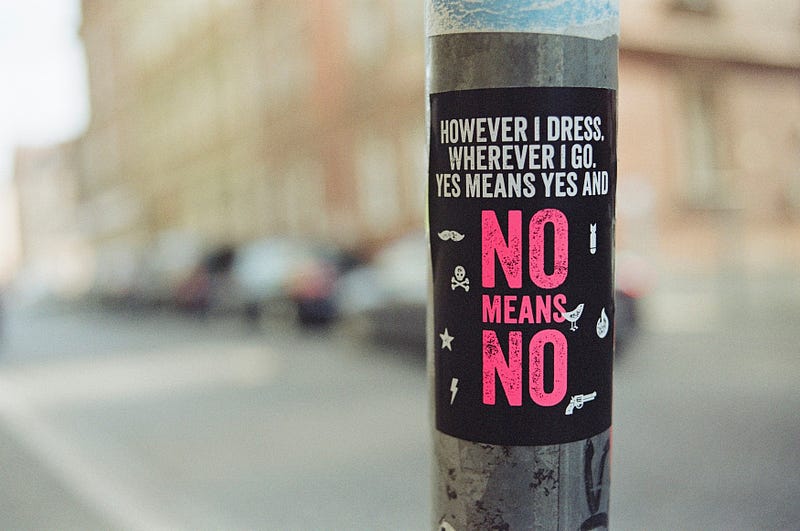
A story buried deep within, left unspoken, not because it doesn’t matter, but because we’ve been made to feel like it’s easier that way. Easier to stay quiet than to open up and watch the world dissect your pain as if it’s a puzzle they’re entitled to solve.
As a 23-year-old woman navigating the chaos of life — building my own startup, cherishing a healthy relationship, singing my heart out when no one’s watching, and soaking in every ounce of fresh air I can during outdoor adventures — I’ve come to realize that the silence around sexual harassment isn’t just a choice; it’s a survival mechanism.
Why We Don’t Speak
Fear of Being Judged
Imagine reliving your worst moment, not once but over and over again, each time you tell someone about it. The looks that follow, the whispered doubts:
“What were you wearing?”
“Were you flirting?”
“Are you sure it wasn’t just a misunderstanding?”
These questions come not only from strangers but sometimes even from those you thought would understand. So instead of opening up, you bury it, hoping the pain will fade on its own.
The Exhaustion of Explaining
Do you know how tiring it is to explain something that should never need explaining? To try to justify why your boundaries were crossed as if it’s somehow your responsibility?
I’ve seen women — friends, acquaintances, even strangers — break down mid-sentence because they just couldn’t put the weight of their experience into words that felt “acceptable.”
The “It’s Not a Big Deal” Mentality
Sometimes, we gaslight ourselves.
“It wasn’t that bad.”
“Others have gone through worse.”
We minimize our pain because society has conditioned us to believe that speaking out makes us “dramatic” or “attention-seeking.” We tell ourselves to let it go, but deep down, the memory festers, turning into quiet resentment.
Real-Life Experiences
I’ll never forget the night a close friend called me, her voice trembling. She’d just been harassed at a party. But instead of focusing on what happened, she was agonizing over whether she should tell anyone. Her reasons mirrored so many others I’ve heard:
- “What if they think I’m lying?”
- “What if it ruins his life?”
- “What if it ruins mine?”
And that’s the harsh truth — women don’t just weigh their pain; they weigh the consequences of sharing it.
Here’s the thing: it’s not just about the incident itself. It’s about the environment we live in — a society that often protects the perpetrator more than the victim.
- Workplaces: Reporting harassment at work can mean risking your job or being labeled as “difficult.”
- Families: In some homes, bringing up harassment means being told to keep it quiet to “protect the family’s reputation.”
- Friends: Even among friends, there’s fear of being the one who “ruins the vibe” by bringing up something heavy.
My Own Struggle With Speaking Out
I remember a moment in my own life when I felt the sting of unwanted attention. It wasn’t violent, but it was invasive — a touch on my lower back at a crowded event, a lingering stare that made me feel like a possession instead of a person.
I wanted to say something. I wanted to scream, “Don’t you dare think this is okay!”
But I didn’t.
Instead, I walked away, my heart pounding, my fists clenched, angry at him and even angrier at myself for not confronting him.
Why didn’t I? Because in that split second, my brain raced through every possible outcome, and none of them felt worth the effort.
What finally broke my silence wasn’t an incident of my own. It was a younger girl — a friend of my cousin — who came to me one day, visibly shaken, and asked, “What do I do?”
She told me how someone had crossed a line at a party. She didn’t want to tell her parents or friends, fearing the backlash and the inevitable whispers. Her story mirrored my own in so many ways, and I realized something:
We owe it to ourselves, and to every woman who comes after us, to speak out. Not because it’s easy, but because our silence lets the cycle continue.
How We Can Change This
Believe Women
The first step is simple: believe women when they speak up. Dismissal is a dagger to the courage it takes to share something so deeply personal. Even if you don’t fully understand, offering support can make all the difference.
Teach Boundaries Early
This isn’t just a conversation for women — it’s one we need to have with everyone. Men need to understand what constitutes harassment, and women need to be empowered to stand firm in their boundaries.
Stop Victim-Blaming
The questions we ask need to change. Instead of, “What were you doing there?” or “Why didn’t you leave?” ask, “How can I support you?” Blame the harasser, not the victim.
Build Safe Spaces
Whether it’s in workplaces, schools, or even among friends, we need environments where women feel safe to report harassment without fear of retaliation or judgment.
To Every Woman Reading This
If you’ve experienced harassment and stayed silent, know this: your silence doesn’t diminish your strength. Your worth isn’t tied to how you react in moments of violation. You deserve safety, respect, and understanding, whether you choose to speak out or not.
And if you’re a woman who has spoken up, I see you. Your courage lights the way for others, even when it feels like no one is listening.
To the men reading this: be better. Don’t just avoid being part of the problem; actively work to be part of the solution. Call out inappropriate behavior, even when it’s uncomfortable. Listen to the women in your life.
Life is hard enough without carrying the weight of unspoken pain. Let’s make it easier for women to unburden themselves without fear of judgment or reprisal.
Let’s make the silence around sexual harassment a thing of the past.
The Change Starts With Us
Ending the silence around sexual harassment isn’t a one-person job — it’s a collective responsibility. It starts with conversations like this one, where we dare to break the norm of brushing things under the rug. It continues with each of us standing up, speaking out, and holding others accountable.
For women, it’s about reclaiming our voices. For men, it’s about being allies and actively contributing to a safer, more respectful world.
When I finally opened up to my closest circle about my own experiences, something unexpected happened. They didn’t judge me — they rallied around me. That support reminded me why this fight is so important: no woman should have to carry this weight alone.
We can create a culture where women feel safe to report harassment, where their voices are valued, and where justice is served — not delayed, dismissed, or ignored.
A Call to Action
To everyone reading this: start the conversation. Share your story if it feels safe, or listen if someone trusts you with theirs. Support organizations working to fight harassment and advocate for policy changes in workplaces, schools, and public spaces.
This is not a women’s issue; it’s a human issue. Every voice matters, and every action counts.
If you’ve been silent, know this: your voice is powerful. When you’re ready, use it. And if you’re not ready, that’s okay too. Healing is a journey, not a race.
To the woman I was years ago, scared and unsure: you were strong even in your silence. And to every woman reading this: you are stronger than you know.
Let’s end the silence. Together.